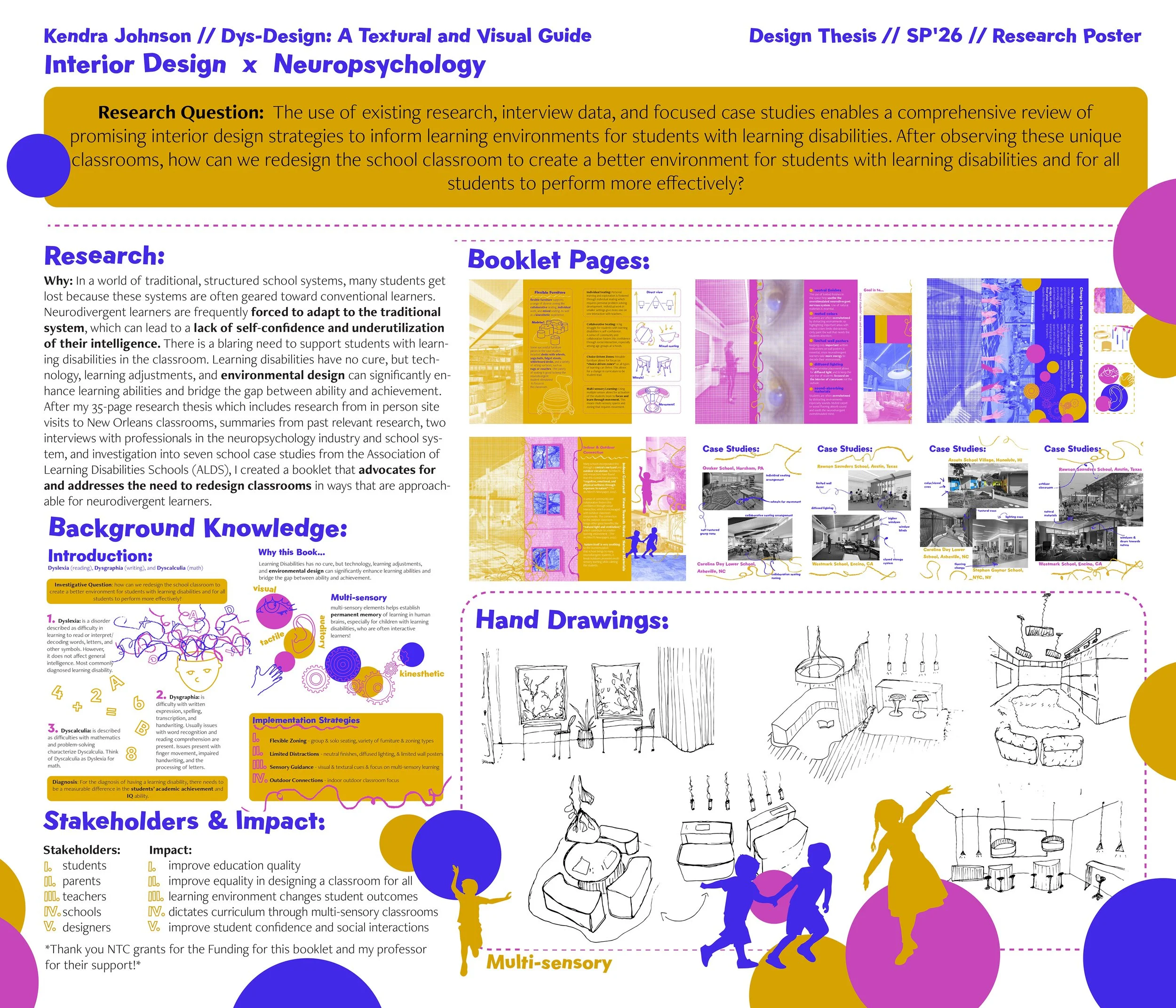
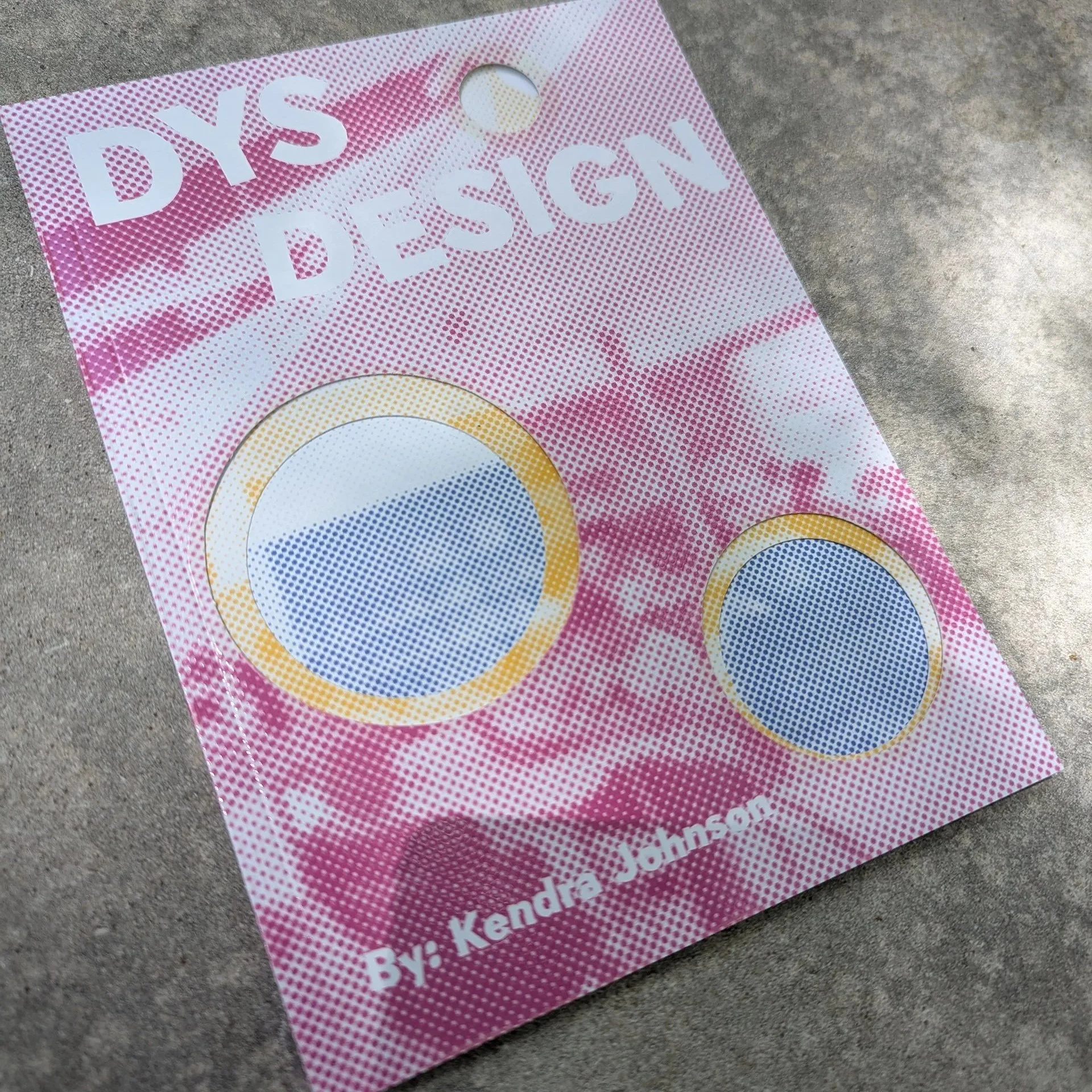
Dys-Design: Thesis Booklet Over the past year, I have designed, researched, and written a 35-page thesis using data from prior research, 3 interviews, and 7 case studies to identify 4 best design practices for classroom interiors that optimize the learning environment for students with learning disabilities. In addition, I was awarded over $ 1,400 in Grant money from NTC Tulane to custom-print 50 multisensory-designed best-practice booklets.
We have the opportunity and the duty as designers to improve the learning environment for over 2.3 million students, making it a place of support, confidence, and joy.
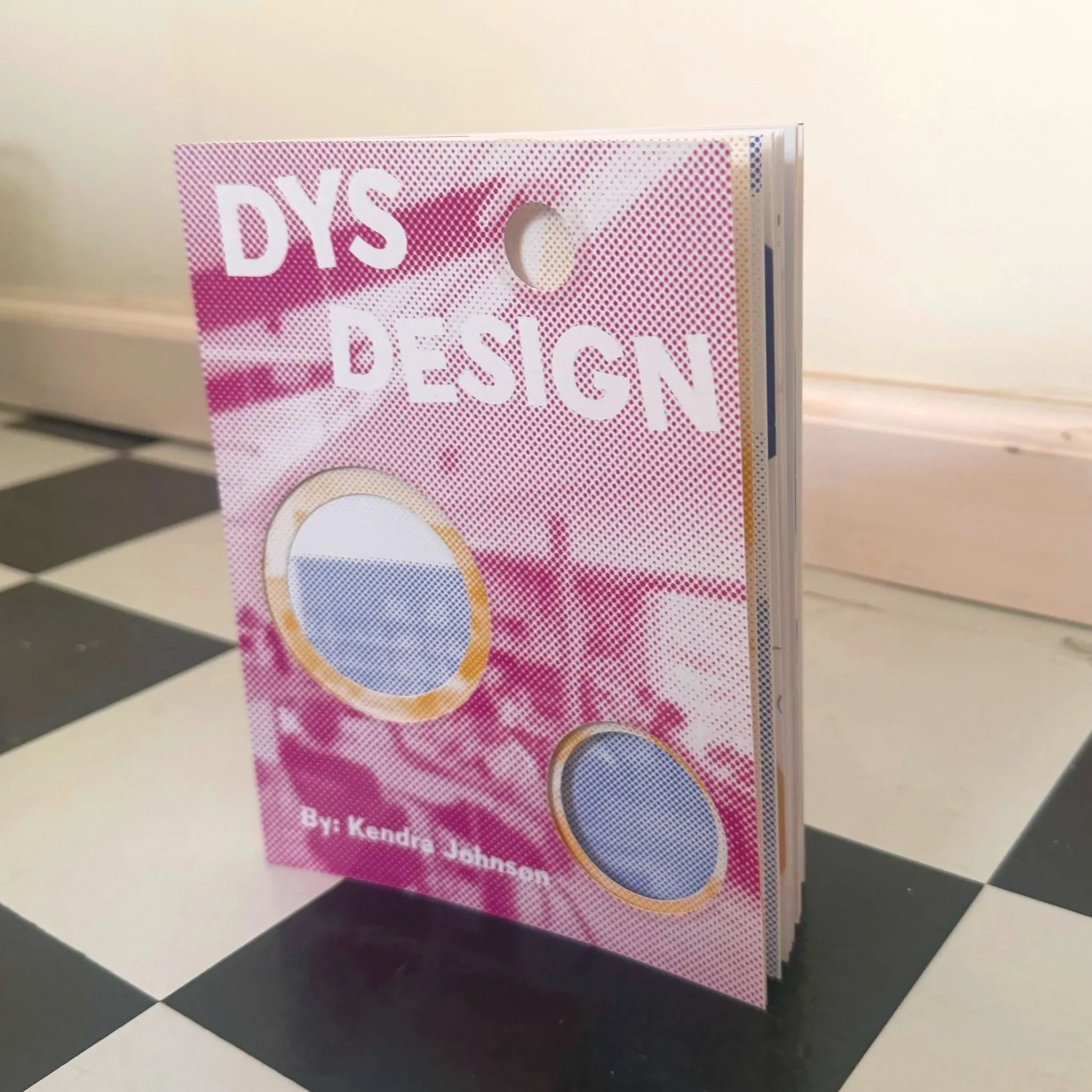
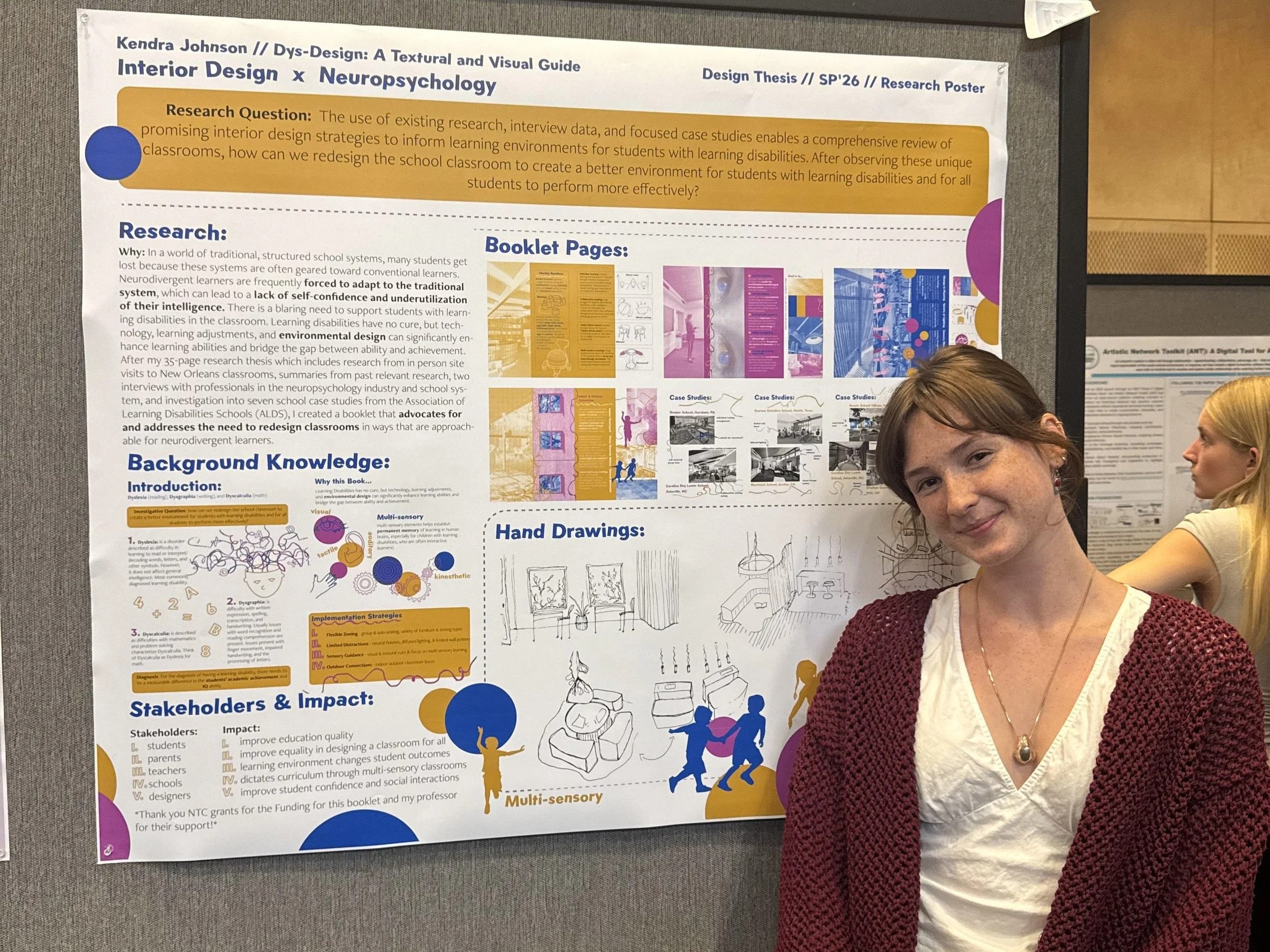
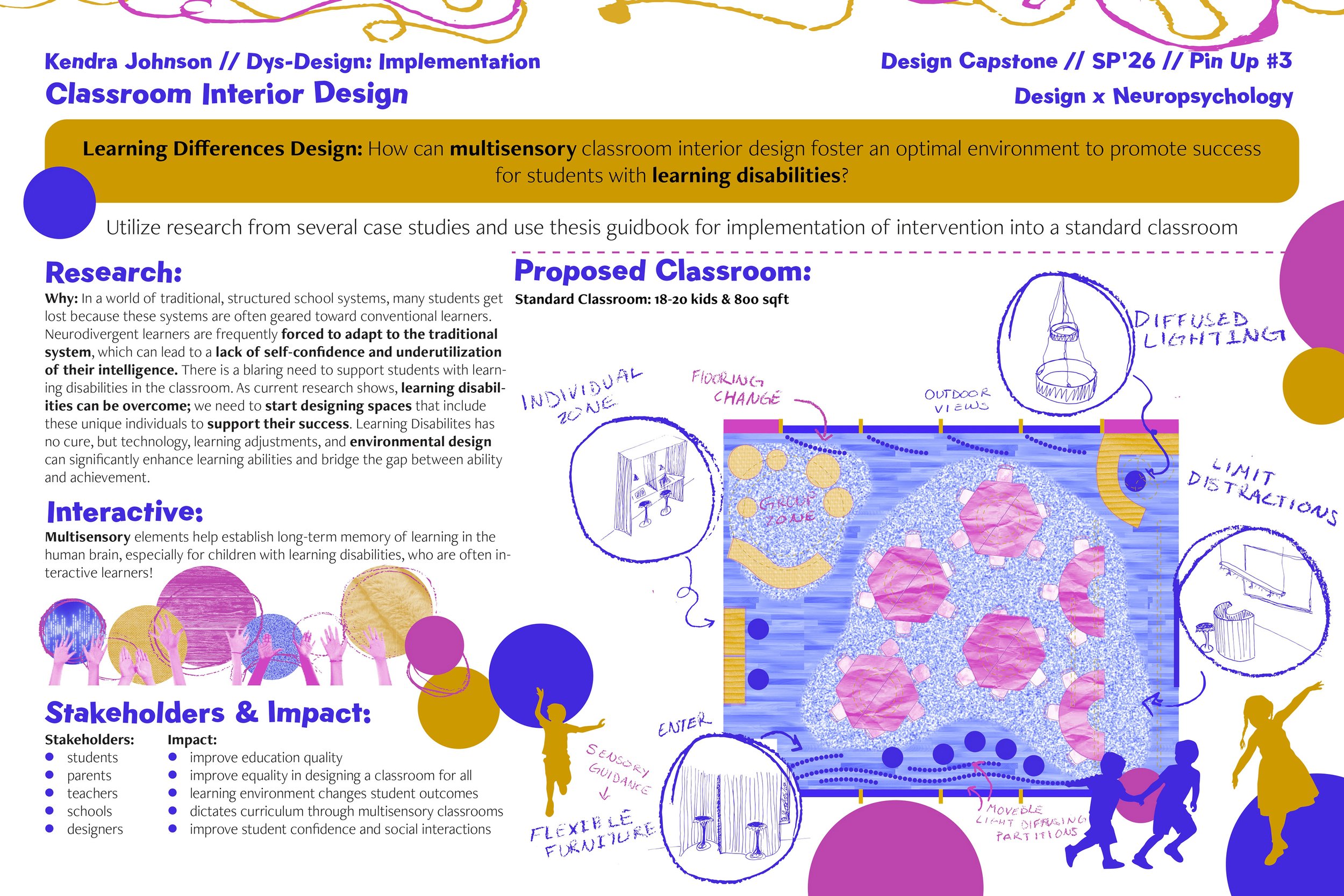
Dys-Design: Capstone ImplementationIn a world of traditional, structured school systems, many students get lost because these systems are often geared toward conventional learners. Neurodivergent learners are frequently forced to adapt to the traditional system, which can lead to a lack of self-confidence and underutilization of their intelligence. There is a pressing need to support students with learning disabilities in the classroom. Learning disabilities have no cure, but technology, learning adjustments, and environmental design can significantly enhance learning abilities and bridge the gap between ability and achievement.
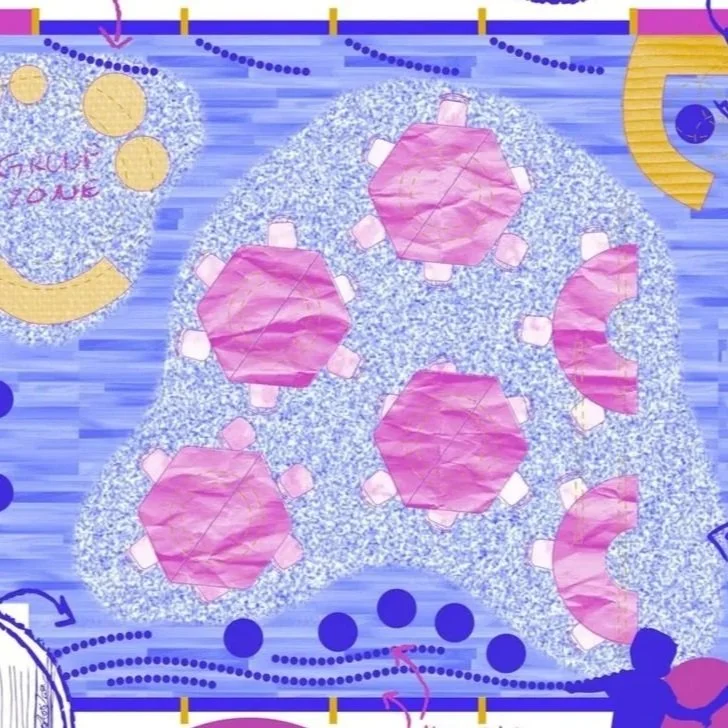
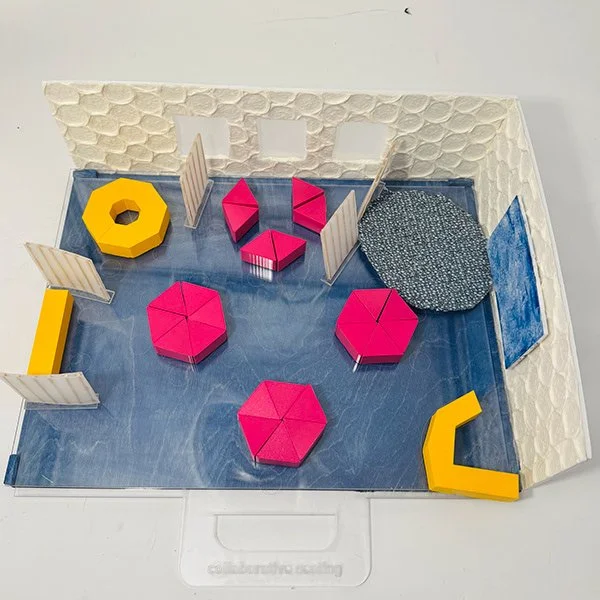
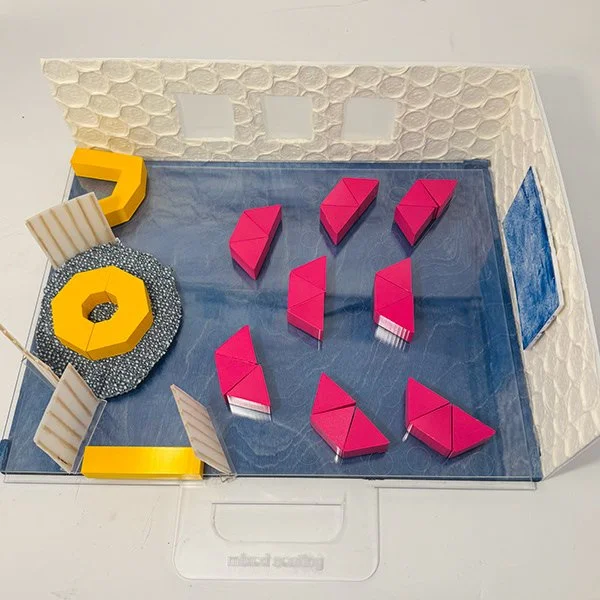
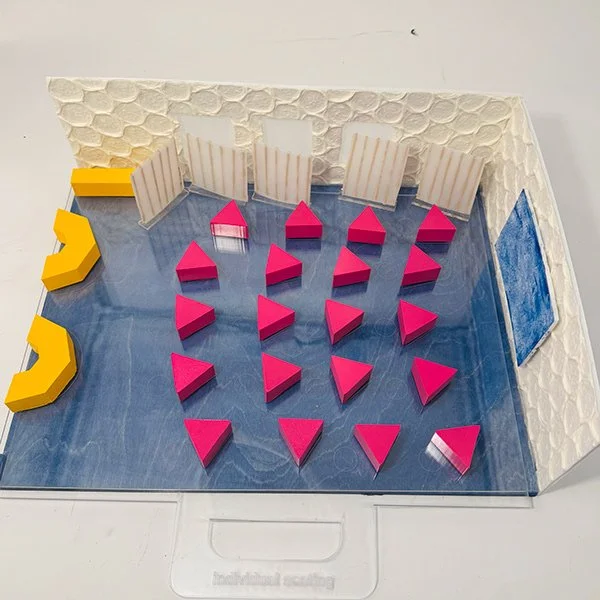
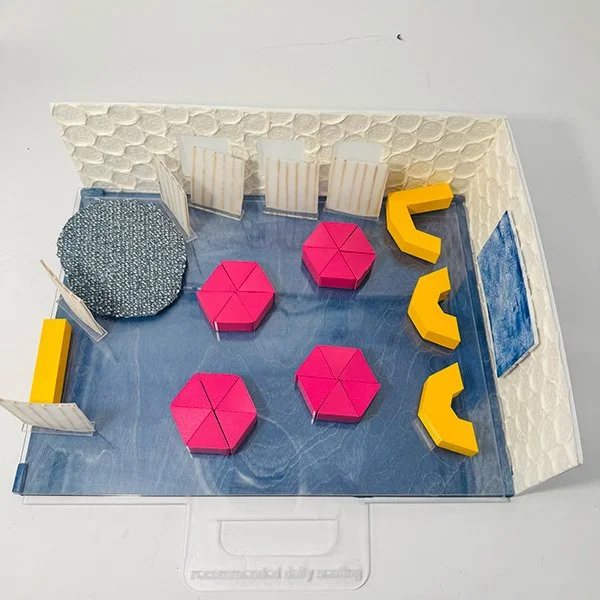
Here is an interactive example classroom to show arrangements of the classroom that promote learning with multisensory interaction.